

Replacing Odoo with a system that fits: ERP for Glory Eyewear
A Moroccan eyewear distributor ran on Odoo it had outgrown. We replaced it with a custom ERP built around how they actually work — the team was self-sufficient five days after go-live.
- Client
- Glory Eyewear
- Published
- June 2026

The setup
Glory Eyewear is a Moroccan eyewear distributor selling in bulk to opticians across the country. They were running on Odoo — and on paper that should have worked. In practice they spent more time fighting the system than running the business: a sprawl of modules they never used, wrapped around a few workflows it couldn't handle at all, with the gaps filled manually, in Excel, under pressure.
Where Odoo broke down — and what replaced it
We sat with the team and mapped every place the system was costing them time or trust. Then we built the replacement around that exact list:
Built for the 300-line order
A normal order here runs up to 300 lines — well past the point where Odoo started to drag. We didn't aim for "a bit faster." We tested the new system far beyond anything the team would ever enter:
Order lines before the system slows down
Every user gets their own system
Instead of one complex interface everyone has to learn, each role gets a dedicated dashboard with access to exactly what they use — and nothing they don't. A salesperson sees their sales, their orders, and the clients carrying the most credit. Administration sees the whole operation. No per-seat subscription tax for adding people: each user just gets the view that fits their job.
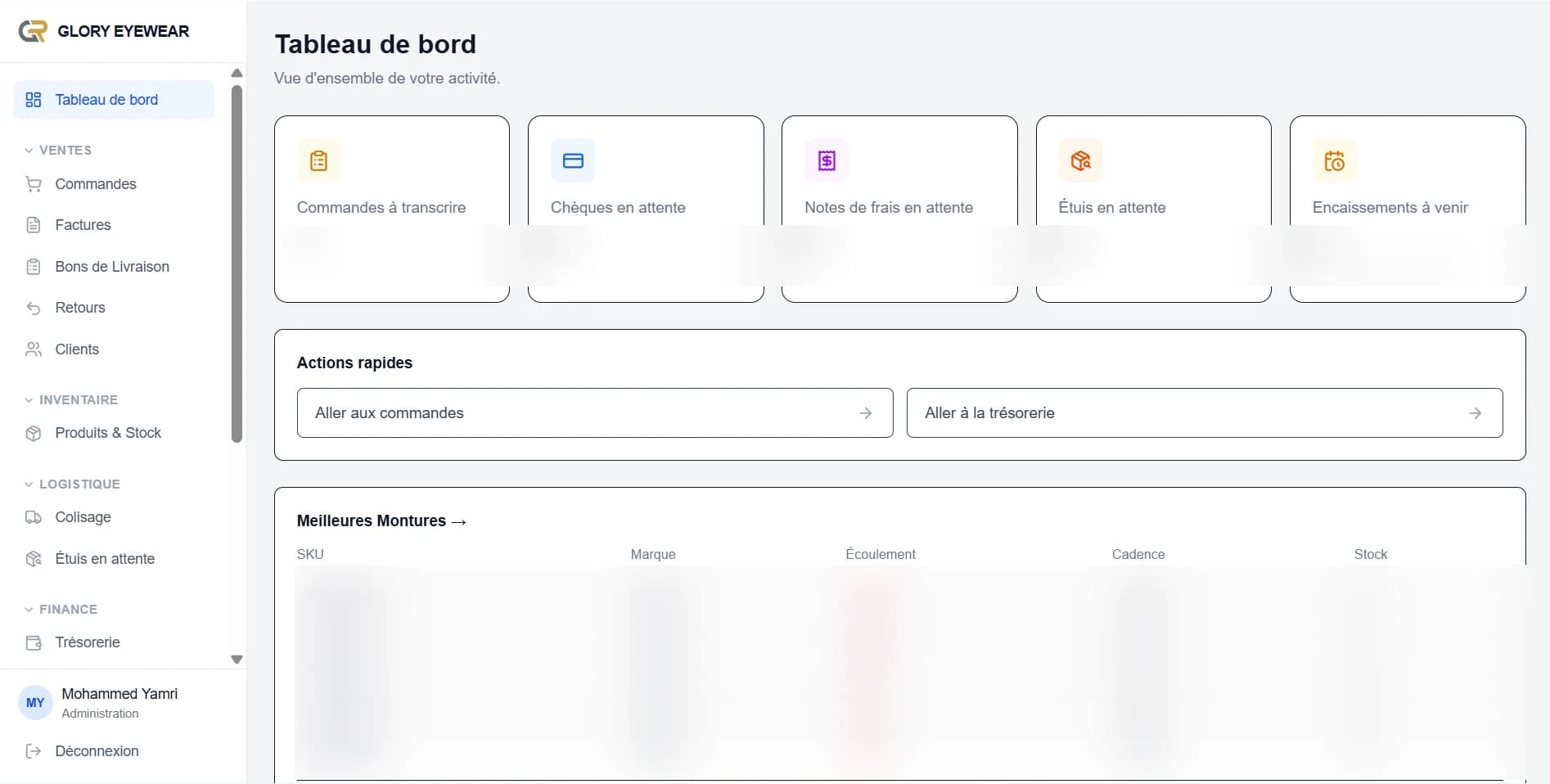
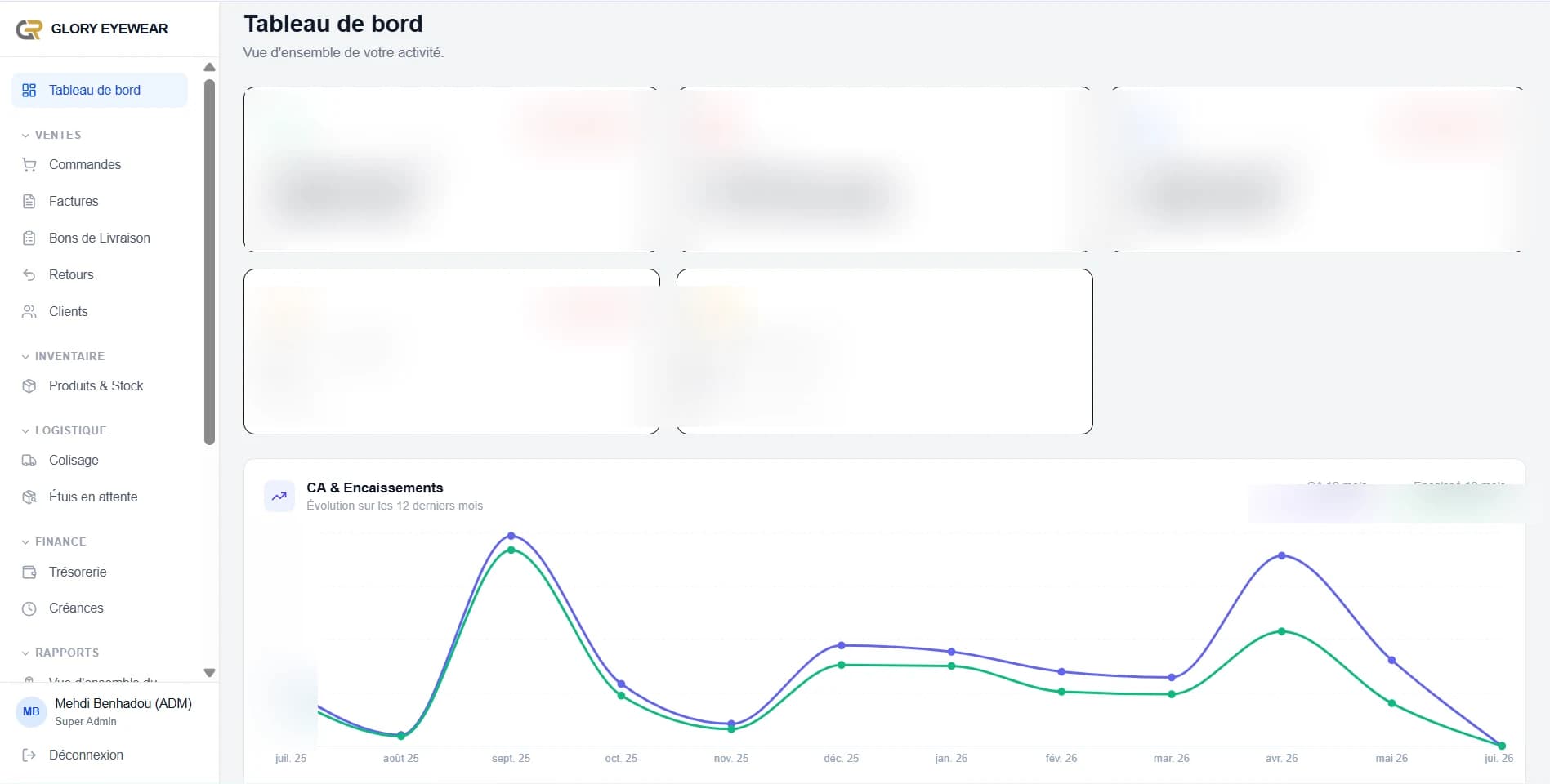
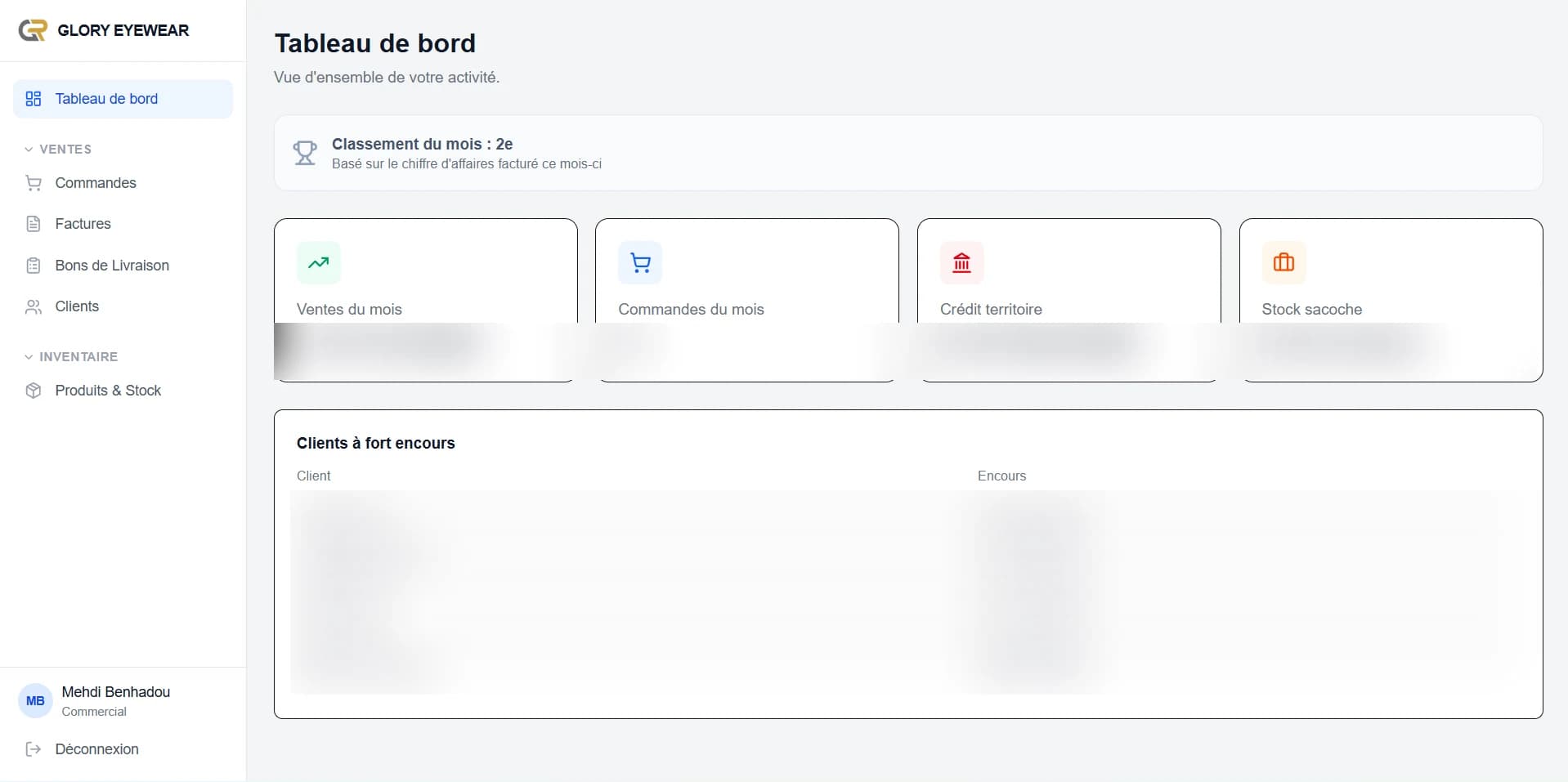
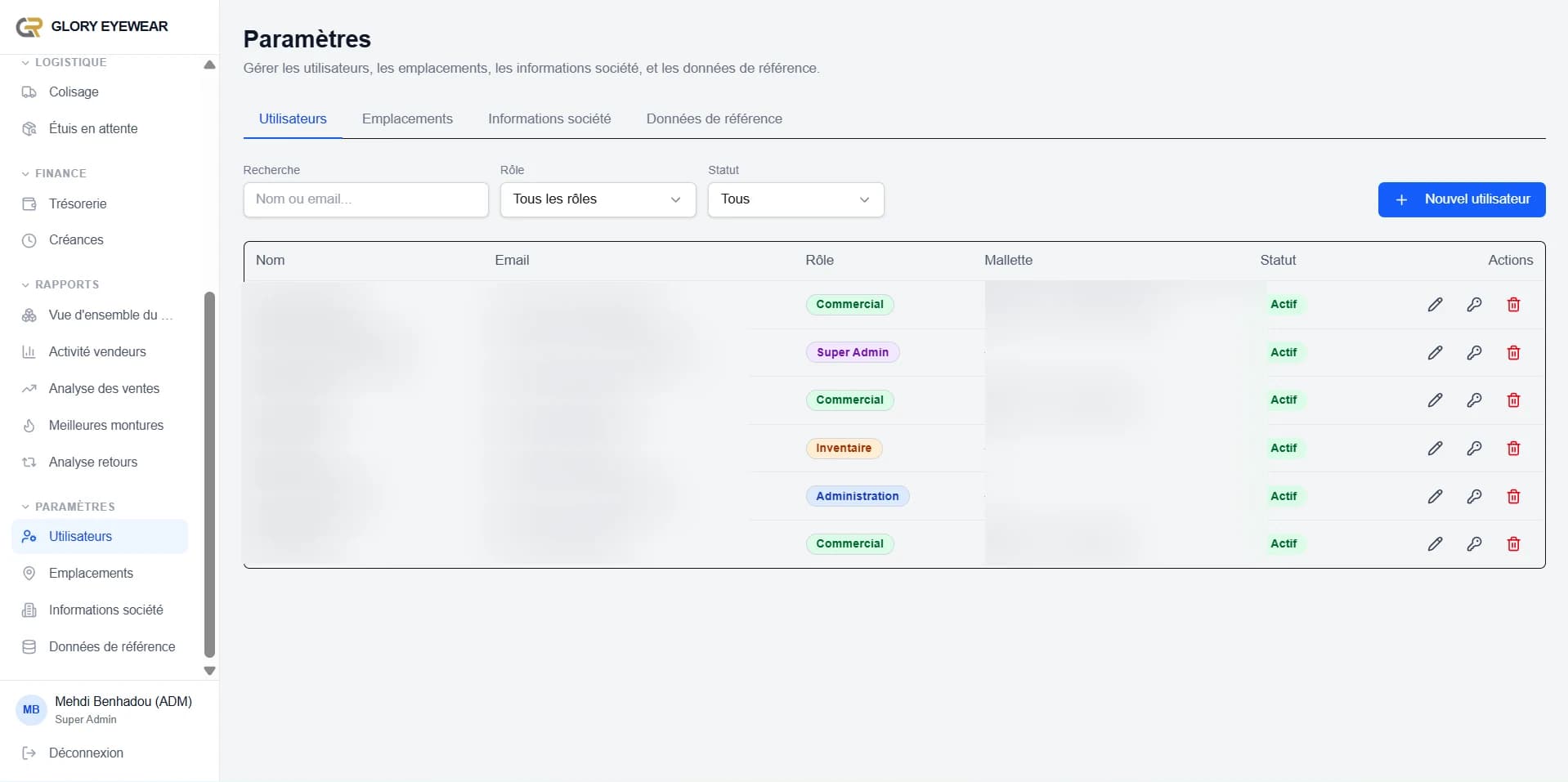
Live KPIs across the whole operation, with a best-performing frames report.
The reports follow the same principle: the team wanted to see the business the way they think about it, not the way a generic ERP slices it. Best-performing frames by the criteria they care about — not just "most sold" — and most-returned products surfaced early, so a quality or fit problem gets caught before it spreads across the territory.
From kickoff to handover
Pre-launch
- Day 1
Planning
We sat with every role and traced the real operation: warehouse rules, order flow, how money is actually collected. The issue list from Odoo became the spec.
- Weeks 1–4
Development
We built the system to mirror how the team actually works — every movement and task they perform in reality became an operation or a button. Nothing more, nothing they'd never touch.
- Weeks 5–6
Tests and refinements
We pushed the system far past their biggest real orders — over 2,000 lines with zero latency — and refined the workflows with the team until they fit.
- Week 7
Data migration
Every record came over from Odoo. Nothing was lost, and nothing was left behind in a spreadsheet.
Post-launch
- Day 1
Live
The team started running the business on the new system.
- Day 5
The questions stop
Employees stopped asking us how to do things. A radical change to their daily tooling, absorbed in five days — because they found themselves in the new system instead of having to learn someone else's.
The full project — ERP plus their public website, gloryeyewear.ma — closed in two months. By the end the client wasn't asking for fixes; they were asking for new features they'd been too wary to take on at the start.